Limescale & Hard Water
How to Descale a Kettle (and Stop It Coming Back) in a Hard Water Area
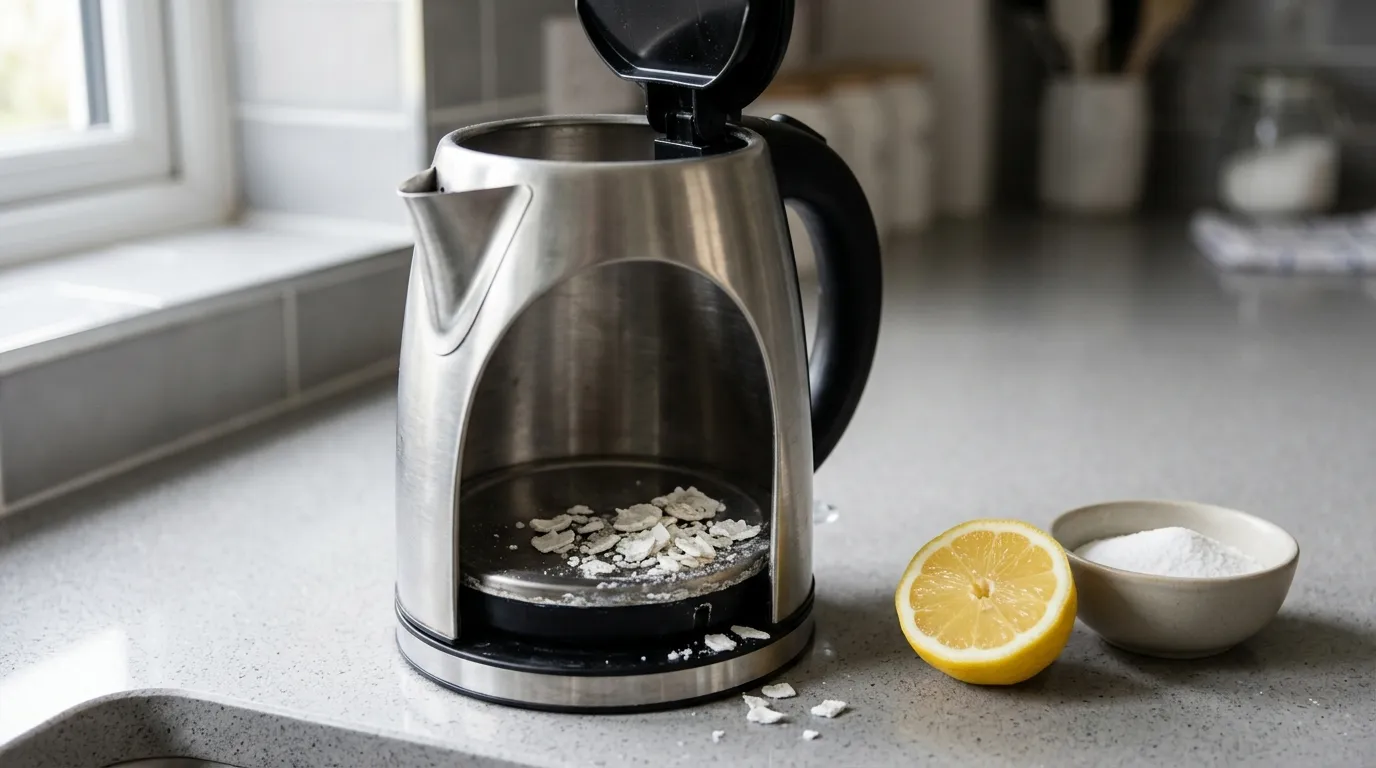
To descale a kettle, fill it halfway with a 50/50 mix of white vinegar and cold water (or two tablespoons of citric acid topped up with water), boil it, then leave it to sit for an hour. Pour the solution away, rinse two or three times, and boil a kettle of clean water once before you use it again. That dissolves the chalky white limescale without scrubbing and without scratching the heating element.
If you are in a hard water area, the real problem is not getting the scale off once. It is stopping it coming straight back. This guide covers both: the quick descale, and the routine that keeps a kettle clear in places like London, Cambridge, Ipswich and the South East where water is at its hardest.
Why your kettle scales up so fast
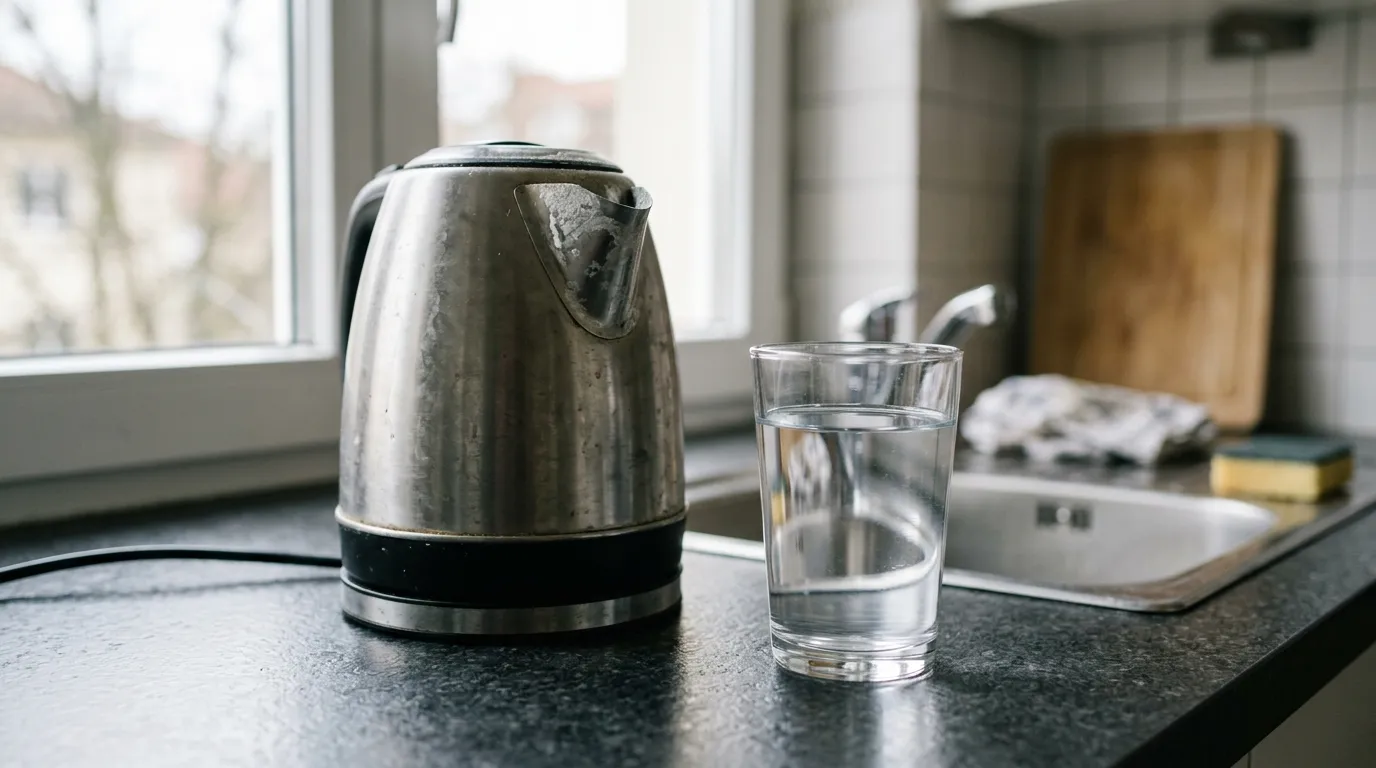
Limescale is calcium carbonate. It is already dissolved in your tap water as calcium and magnesium that the water picked up flowing through chalk and limestone underground. When you boil the water, those minerals come out of solution and stick to the hottest surface, which is the metal element or base of your kettle. The harder your water, the more minerals each boil leaves behind.
The Drinking Water Inspectorate (DWI), which regulates tap water quality in England and Wales, classifies hardness like this:
| Classification | Hardness (mg/l calcium carbonate) | Typical UK areas |
|---|---|---|
| Soft | Up to 100 | Scotland, Wales, North West England |
| Slightly hard | 100 to 150 | Parts of the North and South West |
| Moderately hard | 150 to 200 | Patchy across the Midlands |
| Hard | 200 to 300 | Birmingham, Leicester, much of the Midlands |
| Very hard | More than 300 | London, the Thames Valley, Cambridge, East Anglia, the South East |
The chalk and oolitic limestone under the South and East of England produce water that often sits in the 250 to 350 mg/l range. Granite and slate areas in Scotland, Wales and the North West give soft water, which is why a kettle in Manchester might go months between descales while one in Reading furs up in a fortnight. You can check your own figure on your water company’s website by entering your postcode, or read our guide on checking your water hardness by postcode.
What you need
You do not need a branded descaler. Two cheap kitchen items work as well as anything sold for the job:
- White vinegar. Standard distilled white vinegar is around 5 to 6 per cent acetic acid. Use plain white only. Malt, cider and wine vinegars are weaker and leave a stronger smell.
- Citric acid. A white powder sold in the home baking aisle, hardware shops and online. It is the same acid found in lemons, leaves no lingering smell, and is the gentler choice for kettles with a coated or enamelled interior.
A fresh lemon works in a pinch (use the juice of one, topped up with water), but it is weaker than either of the above and better for light scale.
Method 1: White vinegar
- Fill the kettle halfway with equal parts white vinegar and cold water. Make sure the element or base is fully covered.
- Boil the kettle, then switch it off and unplug it.
- Leave the solution to sit for 30 minutes to an hour. Thick scale needs the full hour.
- Tip the solution away. Loose flakes will rinse out. For anything stubborn, a soft washing-up brush or an old toothbrush dipped in the solution will lift it without scratching.
- Rinse the kettle two or three times with clean water.
- Fill with fresh water, boil, and pour that boil away. Repeat once more if you can still smell vinegar. This clears the taste before you make a drink.
Method 2: Citric acid
- Add two tablespoons (or roughly two heaped teaspoons for a smaller kettle) of citric acid powder to a kettle filled halfway with water.
- Boil the kettle, then switch it off.
- Leave it to stand for 20 minutes to an hour. You will see the scale fizz and lift off.
- Pour the solution away and rinse two or three times.
- Citric acid leaves no smell, so you can skip the extra boil-and-discard step. That saves a little electricity, which matters if you are descaling every couple of weeks.
Which method should you use?
| White vinegar | Citric acid | |
|---|---|---|
| Strength on thick scale | Strong | Strong |
| Smell and aftertaste | Noticeable, needs rinsing and an extra boil | None |
| Safe on coated or enamel interiors | Check manufacturer guidance first | Gentler, usually fine |
| Cost and availability | In every cupboard | Baking aisle, hardware shops, online |
| Best for | A one-off deep clean | A regular fortnightly routine |
For very hard water areas, citric acid used every two to three weeks is the easiest habit to keep up because there is no rinsing marathon afterwards.
The bits people forget: filter, spout and base
The white grit that ends up in your tea usually comes from two places the descaling solution does not always reach.
- The spout filter. Most electric kettles have a small mesh filter that clips out behind the spout. Pop it out, soak it in the same vinegar or citric solution for ten minutes, then brush it clean. A blocked filter is the main reason scale flecks make it into your cup.
- The base and element. On kettles with an exposed metal base, the scale forms a hard ring around the edge. The boil-and-soak method handles this, but the corners may need a soft brush.
Never scrape the element or base with anything metal or abrasive. A scratched element scales up faster and corrodes.
How to stop limescale coming back
Descaling treats the symptom. In a hard water area the scale will return, but you can slow it right down.
- Empty the kettle after each use. Water left standing, especially overnight, evaporates and concentrates the minerals, which dumps more scale. Pour leftover water away.
- Only boil what you need. Less water boiled means fewer minerals deposited each time.
- Use filtered water. A jug filter such as a Brita reduces the dissolved minerals before they reach the kettle, so scale builds far more slowly. It is not a cure, but it stretches the gap between descales noticeably.
- Descale little and often. Thin scale dissolves in minutes. Once it hardens into a thick crust it needs longer soaks and repeat treatments. A quick descale every two to four weeks in a hard water area is far less hassle than a once-a-season battle.
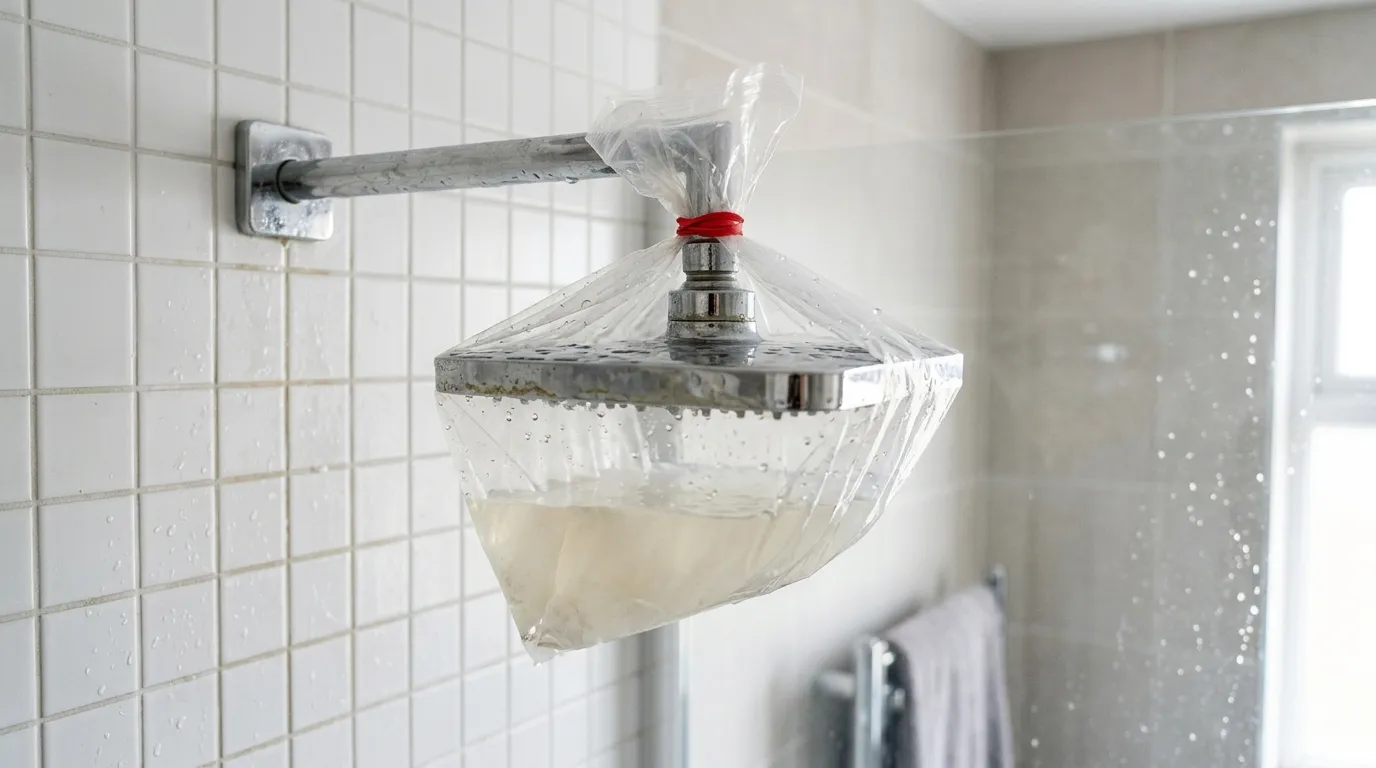
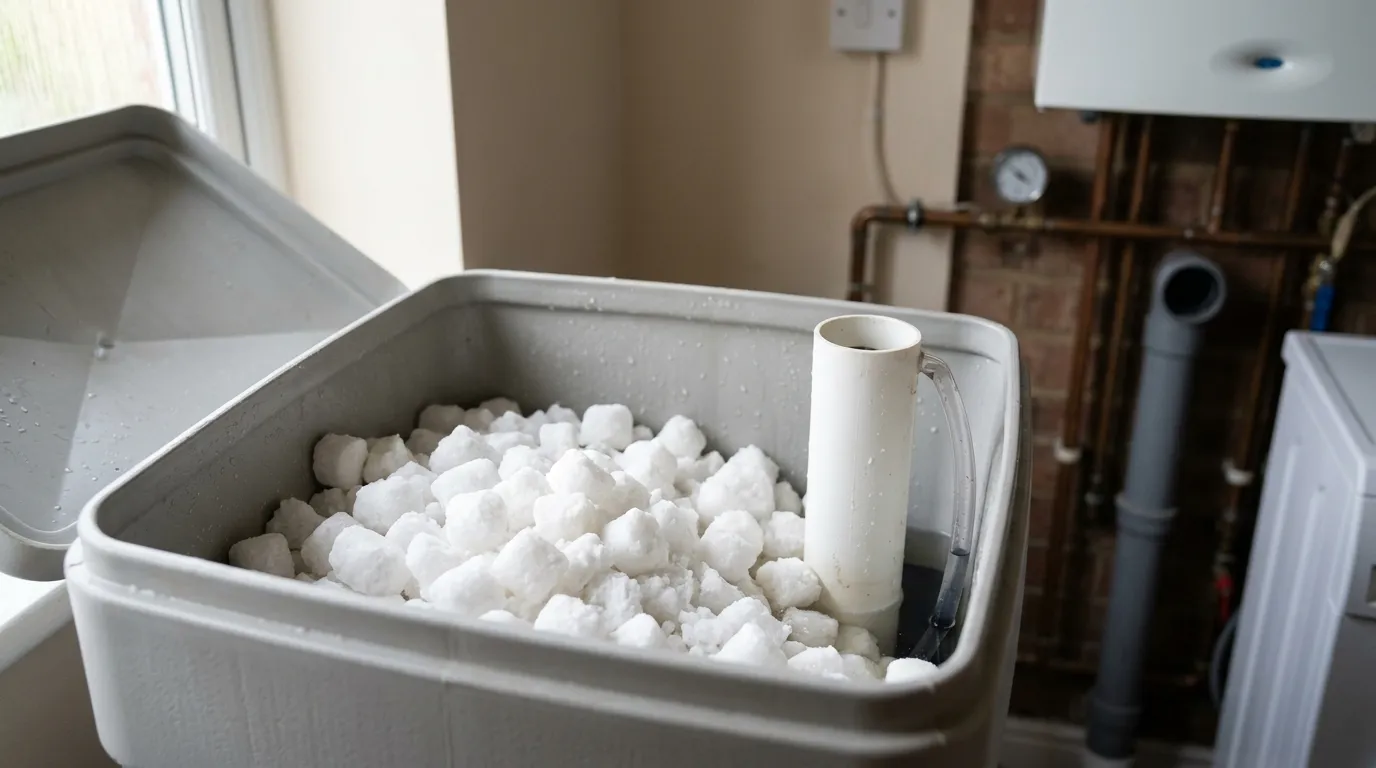
If limescale is a constant fight across your whole house, not just the kettle, a water softener treats the water at the mains and stops scale forming in the kettle, boiler, showerheads and washing machine at the same time. That is a bigger decision and a real cost, but it removes the problem at source.
How often should you descale in a hard water area?
It depends on your water and how much you boil. As a rough guide:
| Water classification | Suggested descaling frequency |
|---|---|
| Very hard (London, South East, East Anglia) | Every 2 weeks |
| Hard (Midlands) | Every 3 to 4 weeks |
| Moderately hard | Every 4 to 6 weeks |
| Soft (Scotland, Wales, North West) | Every 2 to 3 months, or when you see scale |
The honest test is to look inside. If you can see a white film or flakes, it is time.
Frequently asked questions
Is limescale in a kettle dangerous to drink? No. Limescale is calcium and magnesium, both of which are dietary minerals the body needs, and the DWI confirms hard water is not a health risk. It can make tea taste chalky and leave a scum on top, but it is not harmful. The reason to remove it is taste, efficiency and the life of the kettle.
Does descaling save energy? Yes, a little. Scale acts as an insulating layer over the heating element, so the kettle takes longer to boil and uses more electricity to get there. A clean element heats water faster.
Can I use lemon juice instead of vinegar or citric acid? Yes, for light scale. Use the juice of one lemon topped up with water, boil and soak as above. It is weaker than vinegar or citric acid powder, so it struggles with thick, hardened scale.
Will vinegar or citric acid damage my kettle? On a standard stainless steel or plastic kettle, no. On a kettle with an enamelled or specially coated interior, check the manufacturer’s guidance first, as some warranties or coatings call for a specific descaler. Citric acid is the gentler of the two.
Why does my kettle scale up again so quickly? Because you are in a hard water area and the minerals are dissolved in the supply itself. You cannot stop it completely without treating the water, but emptying the kettle after use, boiling only what you need and using filtered water all slow it down a lot.
Do those stainless steel “scale collector” balls or wire mesh actually work? They give the scale somewhere to form other than the element, so you tip the ball into the descaling solution instead of the whole kettle. They reduce visible flakes but they do not reduce the amount of dissolved mineral in the water, so you still need to descale.
Sources
- Drinking Water Inspectorate: Water hardness and hard water
- Your water company’s postcode hardness lookup (Thames Water, Affinity Water, Severn Trent and others publish hardness figures for your supply zone)